A Guide to Vintage Clothing
Vintage clothing, also known as secondhand clothing, are items from a previous decade. Generally, the clothing must be between 20 and 100 years old to be classified as vintage. Any items over 100 years in age are considered antique.

Types of Vintage Clothing
There are many types of vintage clothing, including new, deadstock, manufactured, and homemade clothes. If not otherwise noted, vintage clothing is typically manufactured. It is the most common type. Although homemade vintage clothing certainly also exists. Regardless of the type, all vintage clothing can have flaws and is determined valuable by a number of factors.
Manufactured Clothing
Manufactured vintage clothing is the most readily accessible type, since it has been made by a company in mass production. These items are worn, and vary in their desirability, based on a number of factors, including the condition of the clothing, the rarity of the piece, the brand, and time period from which the item came.
An example of mass-produced commercial manufactured clothing are 950s poodle skirts.
Homemade Clothing
Homemade vintage clothing is made by unlicensed, private designers. By their nature, these are most often one-of-a-kind items and are much rarer than manufactured vintage clothing. Quality of these garments can vary greatly, so it is important for the consumer to be aware of all flaws when purchasing.
Homemade vintage clothing often consists of items such as custom or DIY garments stitched by individuals at home, frequently using vintage sewing patterns like McCall’s or Simplicity and unique fabrics.
Deadstock
Deadstock, or New Old Stock (NOS), has not been worn, unlike manufactured vintage clothing. If deadstock clothing contains its original tags, the value is often higher. Sometimes manufacturers will produce more items than there is demand for, and this unsold merchandise becomes deadstock. If the collector is searching for a particular item, deadstock clothing may be more difficult to find.
Retro Clothing
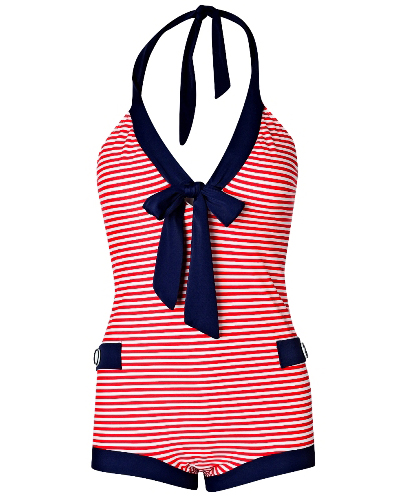
Often confused for vintage clothing, retro clothing is not considered vintage. Short for retrospective, retro clothing is imitation vintage clothing, or clothing made in a recent era, replicating vintage styles and trends. This type of clothing has become very popular in recent decades, with fashion taking heavy influence from earlier periods of time. Brands like Anthropologie and ModCloth often have a retro style. Some reasons people are drawn to retro brands, as opposed to vintage clothing, are that the clothes often come in a variety of sizes and colors, and have not been previously worn.
History
The demand and popularity of vintage clothing has risen since the 1990s, with its prominence in popular culture. After many celebrities and top models, such as Reese Witherspoon and Kate Moss, began wearing vintage clothing, it became a popular trend. The rise in demand for these items is also due to emerging knowledge and interest in economic sustainability, namely repairing, reusing, and recycling vintage clothing. Subgroups from bygone eras, including rockabilly and swing dancing, have also contributed to the growth of vintage clothing, as authentic clothing from that time period is often seen as more desirable than reproductions.
Value
Value of a piece of clothing is determined by a number of factors, including the age of the garment or era of the clothing, its rarity, the designer or company from which it was manufactured, and the provenance, or the occasion for which it was worn and who wore it. Historical significance of a garment can very likely raise its value, and an item can have more value to a person based on personal significance to one’s life. Pre-1950s clothing is much more difficult to find in good condition and can be more expensive to procure. Post-1950s vintage clothing is often more affordable and easier to locate, identify, restore, and conserve.
Many favored designers are representative of a specific point in time and are therefore major targets of vintage clothing aficionados. These designers include Coco Chanel, Jeane Lanvin, Christian Dior, Emilio Pucci, Yves Saint-Laurent, Giorgio Armani, Vivienne Westwood, and Jean Paul Gaultier.
The condition of an item is essential to its value. Being free from tears or stains, maintaining a rich color, retaining its labels and tags, not having an offensive odor, and having no holes, all raise the value of the garment.
Purpose
If the item is being purchased to be worn, the consumer must be cautious that the garment can withstand the pressure of a body and the movement involved in wear. The garment may not have tears when purchased, but due in large part to its age, may rip when worn. Therefore, it is essential to ask questions and inspect items to gather an appropriate assessment of a garment.
Many customers opt to purchase vintage clothing for a collection not designed for wear. The integrity of the piece is less likely to be compromised if it is not worn. Collecting vintage clothing for a purpose other than being worn, broadens one’s choices, as a collector does not need to obtain garments that fit her body. Many collectors choose to procure items that are able to fit a woman of today, so that a collector may be able to resell the clothing to an individual who may want to wear the garments. Especially small clothing is not as versatile as clothing of a more universal size.
Dating Vintage Clothing
Flies, belt loops, stitching, and materials used are all great indicators as to the date and country of origin of a piece. Even the position of labels, where it is located on the garment, can determine the time period from which the clothing originated. For example, the label of older clothing is usually located near the hem and on some items attached to the bottom hem. Even specific brands contain nuances that allow for dating of vintage pieces. Levis denim can be divided into after 1971 and before 1971 by their label. If the “e” in the brand name is lowercase, it was manufactured after 1971, while a capital “E” denotes pre-1971 condition.
Where to Find Vintage Clothing
Numerous retailers carry vintage clothing. Depending on the type, it may be more difficult or easier to find vintage clothing in acceptable condition. These retailers include estate sales, auctions, secondhand shops, garage sales, vintage clothing shops, flea markets, and vintage fairs. The Internet has made shopping for vintage clothing, especially specific vintage clothing items from a certain era or designer, much more accessible for those interested. Multi-vendor sites, like online vintage clothing shops, and eBay are great resources to a collector or enthusiast. They allow for the buyer to more easily sort through heaps of clothing with a keystroke.
How to Start Buying Vintage Clothing
Many collectors and enthusiasts are attracted to a specific era, type of clothing, or designer. Collecting in this way is a great starting point, as it gives the patron a direction and allows him or her to become more knowledgeable in a niche of vintage clothing.
Be very careful when it comes to sizing. Sizing is determined by standards dictated by the fashion industry and is thus subject to fluctuations based on the time period. A size four in 1942 is much different from a size four in 2006. Be sure to look at the actual measurements of the piece to determine if the size is fit to wear or collect.
Conclusion
Whether motivation for buying vintage clothes is due to a fondness for clothing one’s grandmother wore, or a historical interest in post-war style, collecting is a great way to learn something new and gain expertise in a subject area. It’s also a fantastic way to join a community of like-minded individuals and become more environmentally friendly. Whatever the reason, it is important to remember that all vintage clothing items are not created equal. Consider the quality of the garment, and its historical impact. If the consumer is planning on wearing the item, pay special attention to sizing, and remember that not all women’s size sixes are the same. Whenever possible, compare actual measurements. If possible, have a starting point, whether it be a specific designer, item, or era. Research is especially important to ensure the consumer is not being taken advantage of when it comes to the supposed date or origin of a piece of clothing. Make sure, above all, that you are absolutely thrilled with your purchase.